Whether you keep animals or just need a solid fence on a hillside lot, we install woven wire, post-and-rail, and livestock enclosures that hold up through wet winters and shifting clay soil.
Farm and ranch fencing in El Cerrito covers post-and-rail, woven wire, and livestock enclosures installed with posts set deep in East Bay clay soil - most jobs on a standard city parcel are completed in one to two days, with larger hillside projects taking longer.
El Cerrito sits on the edge of the East Bay hills, and some residential parcels here are large enough for chickens, goats, or other animals. Even on a smaller lot, a well-built agricultural fence can mark property lines, manage animals, or keep wildlife out. The challenge is that El Cerrito's sloped terrain and clay-heavy soil demand more from an installation than a flat suburban lot does.
If your property also needs a contained yard for dogs, we offer pet and dog fencing that can be combined with a larger agricultural fence project.
Walk your fence line and look at each post from the side. If any are visibly tilting, pulling out of the ground, or rocking when you push them, the fence is no longer structurally sound. In El Cerrito's clay-heavy hillside soil, this kind of post movement is common after several wet winters.
If animals you keep are getting through, under, or over the fence - or if neighborhood dogs or wildlife are getting in - the fence is no longer doing its job. This is the most urgent sign that a repair or replacement is needed, and it is worth addressing before an animal is injured or lost.
On El Cerrito's hillside properties, gravity and seasonal soil movement work against fence panels and wire runs over time. If you notice gaps opening between panels, wire sagging between posts, or sections pulling away from posts, the fence is losing its integrity. A sagging section will eventually pull neighboring sections down with it.
Older wood post-and-rail or wire fencing that has been through many Bay Area wet seasons is likely showing hidden rot, rust, or structural weakness even if it looks passable from a distance. A contractor can walk the line with you and tell you which sections are still sound and which need to come out.
Farm and ranch fencing is not one product - it is a range of solutions built for specific situations. Woven wire fencing, or field fence, is the standard choice for keeping most livestock contained. High-tensile smooth wire is popular for horses because it is less likely to cause injuries if an animal runs into it. For goats, the wire gauge and bottom-opening size matter as much as the height - an opening that works for adults will not stop kids. We can also pair any agricultural fence with a gate from our chain link fence inventory when durability and security are priorities.
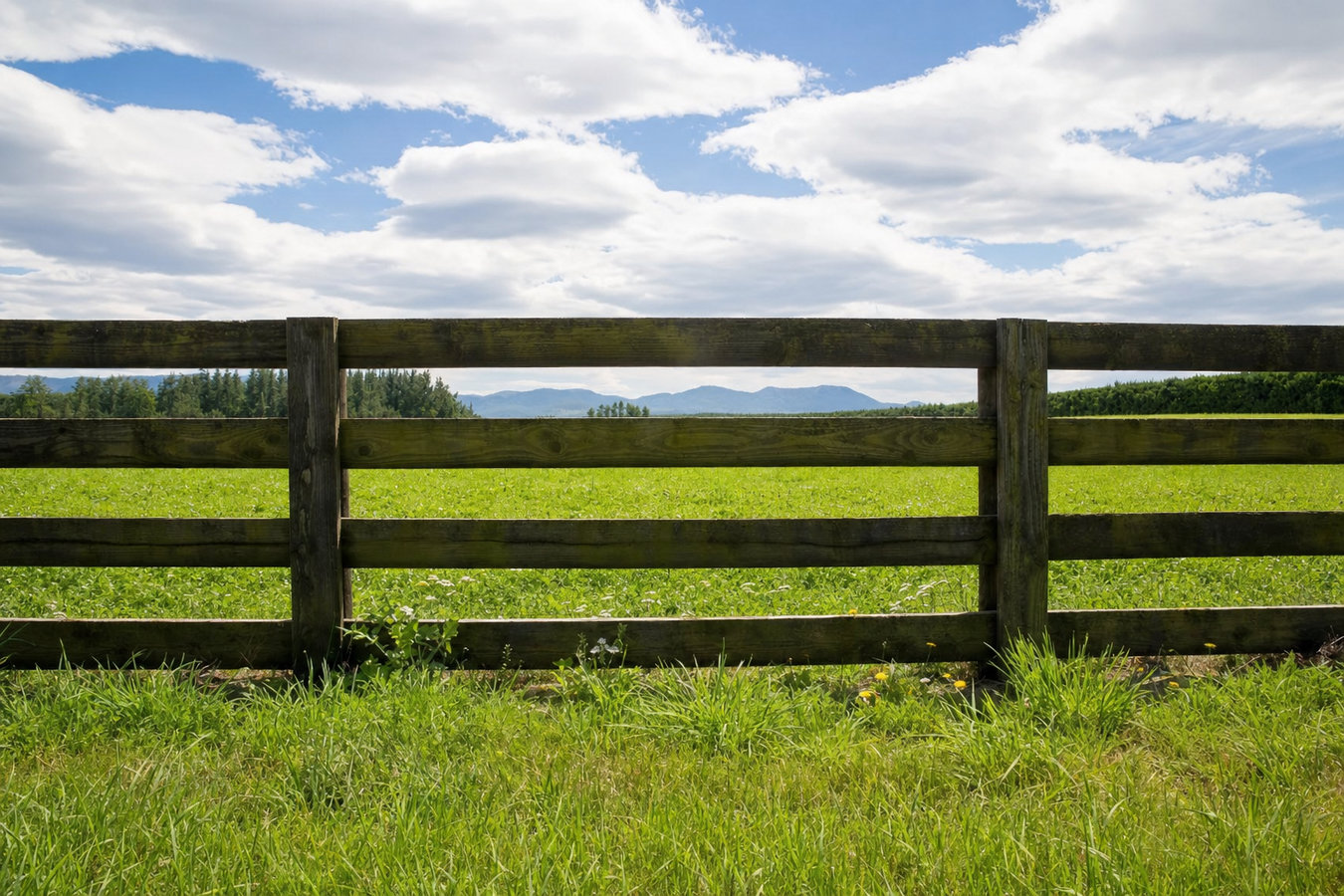
For property-line fencing, post-and-rail is the most common choice in the East Bay - it is visually open, structurally solid, and handles hillside grades well when the posts are set correctly. On fire-hazard parcels in El Cerrito's eastern hill neighborhoods, we also discuss metal post-and-rail alternatives with homeowners who prefer not to add wood fuel near structures. All installations begin with a utility locate call through California 811, and we check permit requirements before any digging starts.
Best for homeowners containing chickens, goats, or general livestock where a tight, uniform opening size is needed from ground level up.
Best for property-line marking, horse pastures, and parcels where an open, traditional look matters as much as function.
Best for horse owners who want a fence that holds firm under pressure without sharp edges that can injure animals.
Best for hillside properties in El Cerrito's fire-hazard zones where non-combustible materials near structures are a priority.
Best for any farm fence that needs a heavy-duty gate hung correctly on a corner post to handle daily use without sagging.
El Cerrito's wet season runs from November through April, and saturated clay soil during those months makes post-hole digging harder and can affect how well concrete cures around new posts. Most experienced contractors in this area prefer to schedule large fencing projects during the dry months when the ground is workable. Beyond the timing, El Cerrito's clay-heavy soil swells when wet and shrinks when dry - that seasonal movement is the main reason posts on older fences start to lean after a few winters. Setting posts deep enough to account for this is not optional here.
We serve properties across El Cerrito and into neighboring communities. In El Sobrante, CA, the larger lot sizes and more rural character make farm fencing a common request. In Richmond, CA, commercial and residential properties often need agricultural fencing along their rear lot lines. We bring the same post depth, wire tensioning, and gate quality to every job regardless of where the property sits.
We reply within one business day. We will ask how much fencing you need, what you are trying to contain or exclude, and whether you have any existing fence to remove - so we know whether a phone estimate is possible or a site visit is needed.
For most farm fence projects, we walk the property before giving you a firm price. We check the terrain, locate obstacles, and identify gate positions. A written estimate follows within a day or two - no pressure, no obligation.
Before any digging begins, we contact California 811 to get underground lines marked - this is required by law. We also confirm with you whether a permit is needed for your specific project, which in El Cerrito depends on fence height, location, and fire hazard zone.
We set posts, attach wire or rails, hang gates, and test every latch. Before we leave, we walk the completed fence line with you - checking that posts are plumb, wire is taut, and there are no gaps at the ground. Any question you have, we answer before the crew packs up.
Free on-site estimate. We check permit requirements and handle the utility locate before any digging starts.
(341) 204-8212We dig deeper and use the right footings for El Cerrito's expansive clay soil, which swells and shrinks with the seasons. A fence set shallow here will lean by the end of the first wet winter. We account for that before we put the first post in the ground.
California law requires underground lines to be marked before any post holes are dug. We make that call on every job. It protects your home and protects our crew - and it is the kind of detail that separates a careful contractor from a careless one.
California 811 - call before you digIn El Cerrito, hillside properties and fire-hazard zones can trigger permit requirements that a contractor unfamiliar with the city might miss. We check with the City of El Cerrito Building Division before any work begins - so you never end up with a fence that needs to come down.
El Cerrito's eastern hill neighborhoods fall in a state-designated fire hazard zone. We talk honestly with homeowners about material options - including metal alternatives to wood - so you can make an informed choice about what goes on your property.
CAL FIRE fire hazard severity zone mapFarm fencing on a hillside El Cerrito property is not the same job as farm fencing on a flat suburban lot. The soil, the slope, the fire-hazard designation, and the permit requirements are all factors that only matter if you know the area. We do.
For guidance on livestock-keeping rules in El Cerrito or the fire hazard zone status of your property, the City of El Cerrito Building Division is the right starting point. The UC Agriculture and Natural Resources program also has practical guidance on fencing for small farms and livestock in California.
Dedicated dog-safe enclosures that can be combined with a larger agricultural fence project on hillside El Cerrito parcels.
Learn MoreA heavy-duty option for perimeter fencing on farm properties where durability and security matter more than appearance.
Learn MoreDry season openings fill up fast - get your project planned now so posts go in when the ground is right.